 Back to Main Page
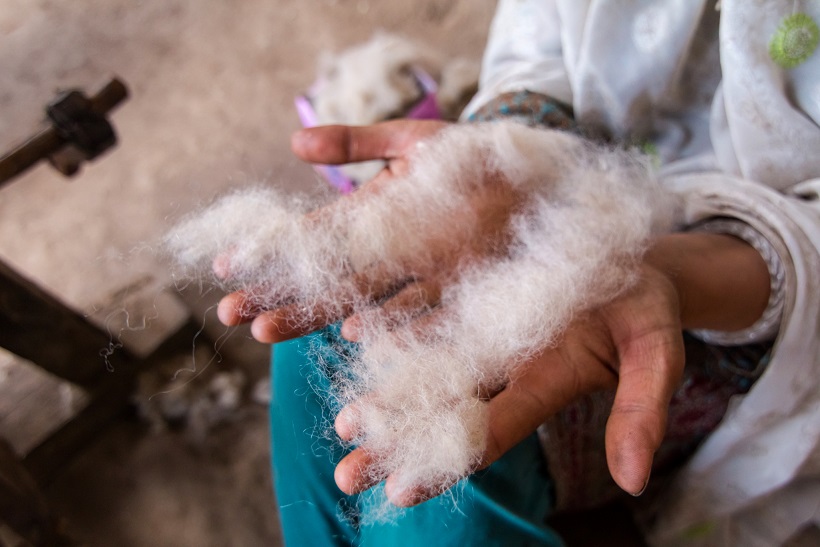
The creation of Shu (Chitrali Patti), a traditional woolen fabric from Chitral, exemplifies the enduring skills and collaborative efforts of both women and men. Women play a critical role at various stages of the production process, including open grazing of sheep, wool carding, preparing woolen threads, and setting the stage for weaving. Their contributions are essential for ensuring the smooth progression of these activities.
The role of men in this process is equally important and cannot be underestimated. Men are responsible for collecting fodder for the winter, shearing the sheep to obtain wool, and participating in the weaving of woolen patti. They also utilize modern machinery to produce the final woolen products—chugha, cloak (shuqa), waistcoat, Chitrali cap, and purses and so on. The collaborative efforts of both women and men are crucial for maintaining the efficiency and success of the wool production industry.
Originally, Shu was produced exclusively for household consumption in the Chitral region, a tradition that dates back to time immemorial. There are three distinct local varieties or brands of Shu, each with its unique characteristics and origins.
- Moghikan Shu is produced in Mogh Village, located in the Lotkoh Valley. Moghikan Shu is renowned for its delicacy, smoothness, and superior quality. Due to these attributes, it commands a higher price compared to other brands.
- Khowari Shu also known as Karbeli Shu, is produced across the Chitral region, including both Lower Chitral and various valleys of Upper Chitral. Khowari Shu is characterized by its roughness, strength, and warmth, making it ideal for protection against harsh winters. It is also widely marketed and utilized in the production of Shuqa, a traditional robe-like overcoat worn in Chitral during the winter months.
- Lasprikan Shu produced in the Laspur Valley of Upper Chitral, Lasprikan Shu is similarly known for its ruggedness and strength. This variety, like Khowari Shu, is designed to offer warmth and durability in the face of Chitral's severe winter conditions.
Each variety of Shu reflects the unique environmental and cultural contexts of its region, providing not only essential warmth but also contributing to the local identity and economy.
This practice continued until around 1900 when the introduction of a modern market system transformed the local economy. With the transition from a barter-based economy to a currency-based one, the people of Chitral began to produce woolen patti not only for personal use but also for commercial purposes. This shift allowed them to earn income and support their livelihoods.
Chitralis working in the Chitrali Bazaar in Qissa Khwani, Peshawar, played a pivotal role in promoting Chitrali Patti as a high-quality home-spun woolen product throughout Pakistan. Their efforts helped establish a strong reputation for Chitrali Patti in the national market. Today, the demand for this product has grown so much that imitations under the brand name "Chitrali Patti" are mass-produced in factories countrywide and abroad.. However, these copies do not match the quality of the original home-spun woolen fabric produced by the artisans of Chitral. The authentic Chitrali Patti remains a unique and valued product, reflecting the craftsmanship and heritage of its place of origin.
The intricate process of creating Shu unfolds in a series of specialized stages, each contributing to the final product's beauty and functionality. This collaborative and detailed approach ensures that Chitrali Patti retains its esteemed place in the market and continues to be a source of pride and livelihood for the people of Chitral.
From Raw Wool to Fine Thread
The journey of producing Shu, a traditional woolen fabric, begins with a team of women assiduously carding the wool by hand, a technique known as "poshp domik." This method, reminiscent of a modern carding machine, effectively detangles the fibers and removes impurities, setting the stage for the creation of high-quality woolen products.
Following this initial cleansing, the wool undergoes a more refined process called "Dondik." This step further purifies the wool, ensuring it is smooth and free of any remaining impurities, thus providing a superior base material for subsequent stages.
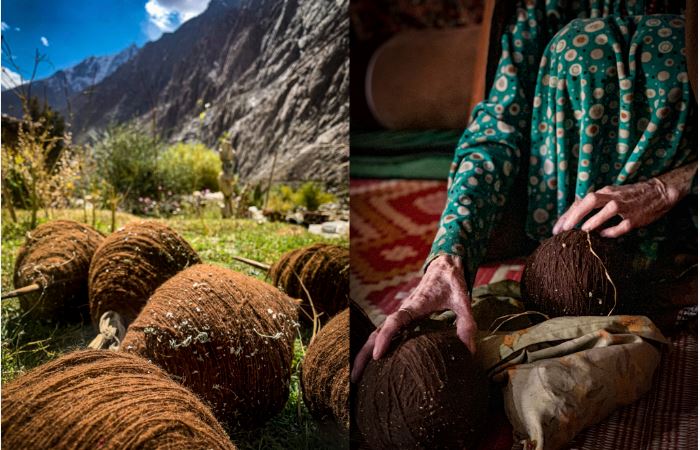
The next crucial phase involves transforming the purified wool into fine threads. The womam artisans feed "Peezhono," or the carded woolen flakes, into a spinning wheel. Through this particular process, the carded wool is carefully spun into usable yarn. This stage is pivotal as it transitions the raw material into the essential into shape required for preparing Shu or woolen patti.
The entire process, from carding to spinning, showcases the expertise and dedication of the both men and women involved. Their traditional techniques, honed over generations, ensure that the wool is of the highest quality, ready to be woven into the distinctive and valued fabric known as Shu.
Dyeing and Weaving
Experienced craftswomen then employ specialized spinning techniques to transform the "Peezhono" output into strong and consistent woolen threads. These threads form the core development material essential for the subsequent weaving process. The expertise of these craftswomen ensures that the woolen threads are durable and uniform, which is crucial for producing a smooth and high-quality fabric.
Chitrali artisans are also committed to sustainability, incorporating natural dyes into their craft. They use materials such as walnut shells (parghalik) to impart rich, earthy hues to their woolen creations. This eco-friendly approach not only preserves traditional dyeing methods but also aligns perfectly with contemporary concerns about environmentally responsible production. By utilizing natural dyes, the artisans reduce their reliance on synthetic chemicals, minimizing environmental impact and promoting a sustainable practice that honors their cultural heritage.
Through these painstaking processes, from hand-carding and spinning to natural dyeing, the craftswomen and artisans of Chitral maintain a balance between tradition and sustainability. Their dedication ensures that the final product, whether it be Shu or woolen patti, must demonstrate their skill and commitment to preserving their cultural and environmental values.
Warp, Weft, and the Weaver's Expertise
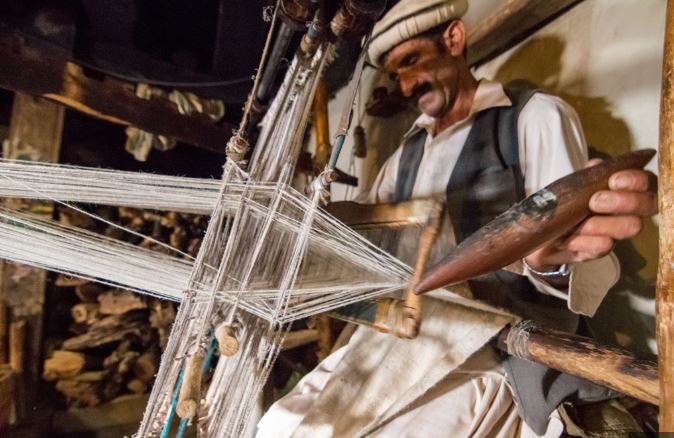
The preparation of warp (lengthwise threads) and weft (crosswise threads) demands a high level of technical expertise and precision. These threads are precisely arranged using specific techniques to ensure that the final fabric achieves the desired size, texture, and structure. This stage is akin to setting up a framework or blueprint, laying the foundation for the weaving process to follow.
The warp threads are stretched out on the loom, aligned perfectly to maintain consistent tension throughout the weaving. Meanwhile, the weft threads are prepared separately, ensuring they are of uniform thickness and strength. The careful arrangement of these threads is crucial as it determines the durability and quality of the finished fabric.
Once the warp and weft threads are prepared, they are delivered to a skilled weaver. The weaver operates the loom with the precision and expertise akin to a programmer working within a well-defined framework. Each movement of the weaver is deliberate, guiding the shuttle through the warp threads to interlace the weft threads with exacting accuracy.
This weaving process is intensive, often taking approximately 20-25 days to complete a single piece of fabric. The extended duration underscores the labor-intensive nature of the craft and the dedication required to produce high-quality woolen products. Every woven thread represents the cumulative skill and effort of the artisans, resulting in a final product that is not only functional but also a work of art.
Through these painstakingly detailed steps, from the preparation of warp and weft threads to the intricate weaving process, the artisans ensure that the final fabric reflects the highest standards of craftsmanship. The time-honored techniques and careful attention to detail embody the rich cultural heritage of Chitral, producing a fabric that is both durable and beautifully crafted.
From Loom to Finished Product
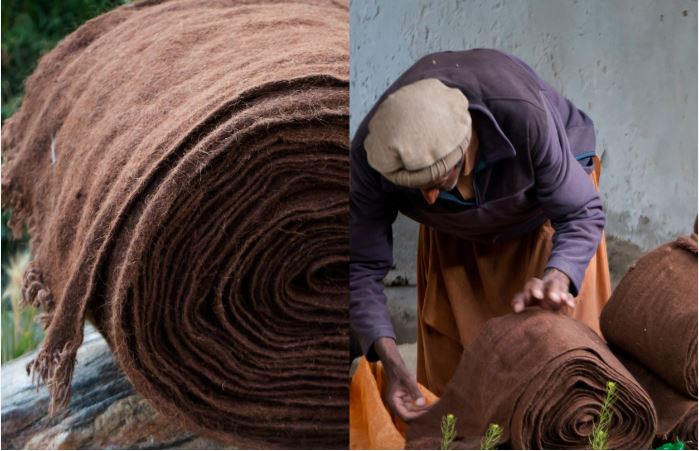
Following the weaving process, a strong individual undertakes the "bohteek" process, a traditional technique that involves washing and fulling the fabric. This method, which uses the individual's feet (khol pongi) to knead and compress the fabric, achieves results similar to those of modern fulling mills. The “bohteek” process increases the density and durability of the fabric, enhancing its overall quality.
Once the fulling is complete, the fabric undergoes a final inspection to ensure it meets the highest standards. The culmination of this collaborative and collective development process results in a diverse range of high-quality woolen products. These products include traditional cloaks, coats, waistcoats, and beautiful souvenirs, each showcasing the versatility and enduring appeal of Shu, also known as Chitrali Patti.
Shu exemplifies the skill and dedication of the artisans, reflecting the rich cultural heritage of Chitral. The fabric's versatility and marketability have made it a sought-after commodity, valued for both its functional and aesthetic qualities. Each piece of Chitrali Patti is not just a product, but a token of the age-old craft that continues to thrive in the modern market.
A Legacy of Skill & Sustainability & Marketing
The creation of Shu (Chitrali Patt) transcends mere fabric production; it is a testimony to a successful collective effort of men and women that has thrived within a traditional setting in the mountainous region of Chitral, northern Pakistan. Each stage of production involves specialized skills and unique working styles, culminating in the creation of beautiful and functional woolen products. While the methods may initially appear "low-tech," they embody remarkable ingenuity and a profound understanding of material properties. This age-old process of Shu creation offers valuable insights for modern sustainable and collaborative development practices.
Chitrali Patti holds high value in the market, facing no significant marketing challenges. The Chitrali Bazaar in Qissa Khwani, Peshawar, along with smaller outlets in other cities, work hard to market Chitrali Patti products. While some produce imitations, the authentic Chitrali Patti continues to command respect and demand due to its superior quality and craftsmanship.
The traditional market of woolen fabrics in the Chitral Bazaar has also played a critical role in marketing products such as chugha (traditional cloaks), Chitrali caps, waistcoats, purses, and other similar items. These products are not only appreciated by national tourists but also attract considerable interest from international visitors. The rich heritage and quality of these items make them popular souvenirs and fashion pieces, highlighting the enduring marketability of Chitrali Patti.
In this way, the creation and marketing of Shu and other woolen products from Chitral serve as a model for sustainable development, blending traditional practices with modern economic success. The collaborative efforts of skilled artisans and marketers ensure that this cultural heritage continues to thrive, benefiting the local community/ artisans and preserving an important aspect of Chitral's cultural identity.